HERBAL GARDEN

स्प्रिक्का (Sprikka)

Classification

Synoyms

Gopakantha, Sprikka, Mahajiraka, Dronapushpi (regional context)

Habit

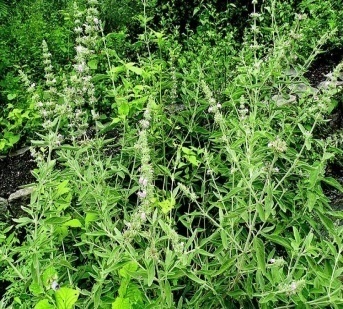
A perennial, aromatic, erect or sub-erect herb or undershrub.

Habitat

Found throughout tropical and subtropical regions of India, especially in open dry places, hilly slopes, and wastelands; common in South India.

Morphology

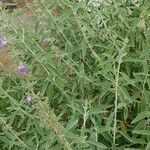
  • Stem: Erect, quadrangular, softly tomentose.
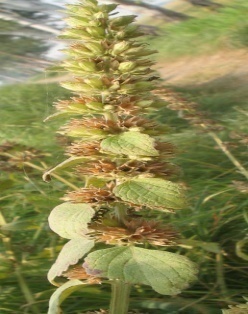
  • Leaves: Opposite, ovate or oblong, serrated, hairy, aromatic.
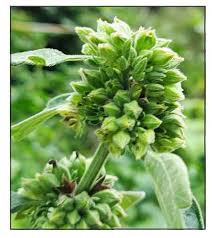
  • Flowers: Purple or pinkish, arranged in dense axillary or terminal spikes.
  • Fruit: Small nutlets, brown, smooth and shiny.

Chemical Composition

Contains essential oils (anisomelic acid, malabaric acid, and caryophyllene), flavonoids, tannins, diterpenes, β-sitosterol, and triterpenoids.

Guna-Karma

Rasa- Tikta, Katu
Guna- Laghu, Ruksha
Virya- Ushna
Vipaka- Katu
Karma- Deepana (Appetizer), Pachana (Digestive), Krimighna (Anthelmintic), Jvaraghna (Antipyretic), Shwasahara (Anti-asthmatic), Kasahara (Expectorant), Vatakaphahara (Pacifies Vata and Kapha).
Doshakarma- Pacifies Vata and Kapha doshas.

Medicinal uses

Useful in cough, cold, asthma, bronchitis, and fever.
Used in indigestion, worms (krimi), and anorexia.
Acts as a stimulant and carminative.
Leaves are used as antiseptic and wound healer.
Decoction is used in chronic respiratory diseases.

Useful Part

Leaves, flowers, and aerial parts.

Doses

Powder: 3–6 g
Decoction (Kashayam): 50–100 ml
Juice (Swarasa): 10–20 ml

Important Formulation

Gopakantha Churna
Anisomeles Malabarica Taila (external use for wounds and inflammation)
Used traditionally in herbal teas and decoctions for cough and fever.

Shloka

गोपकन्थोऽनिलश्लेष्मनाशनः श्वासकासजित्।
ज्वरघ्नः कृमिनाशश्च दीपनी बलवर्धनः॥

Hindi Name​

Sprikka, Gopakantha, Malabar Spur Flower

English Name

Malabar Catmint, Malabar Spur Flower

Botanical Name

Anisomeles malabarica (Linn.) R. Br. ex Sims

Family

Lamiaceae (Labiatae)

Scroll to Top