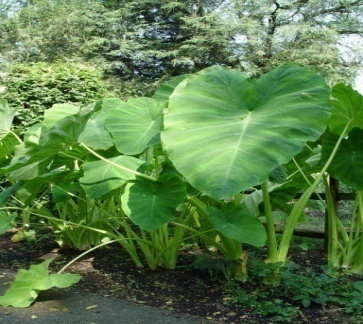
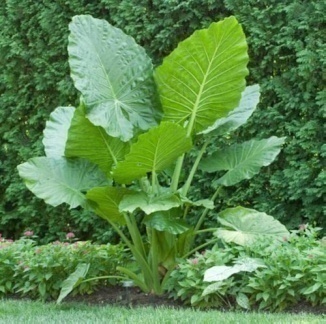
A large, perennial, herbaceous plant with tuberous rhizomes; grows in moist and shady places.
Habitat
Commonly found throughout India in tropical and subtropical regions — especially near ponds, riversides, marshy lands, and shaded areas.
Morphology
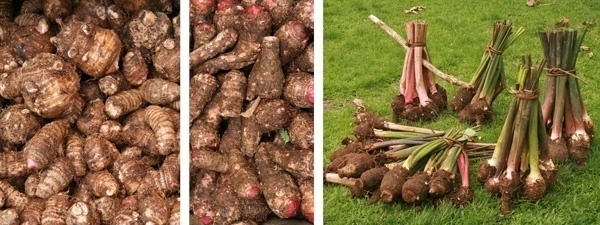
Root: Large, fleshy, underground tuber (corm).
Stem: Short, erect, and partly underground.
Leaves: Very large, sagittate (arrow-shaped), glossy green, with prominent veins.
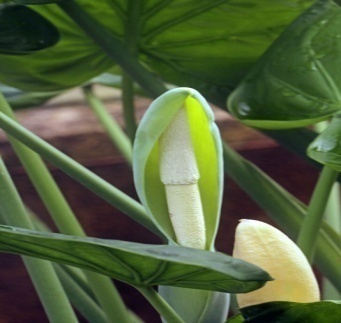
Flowers: Produced in spadix enclosed by a greenish spathe; typical of Araceae family.
Fruits: Small, round, orange-red berries.
Latex: Acrid and irritant when fresh
Chemical Composition
Contains calcium oxalate crystals, starch, amino acids, tannins, saponins, flavonoids, alkaloids, and glycosides.
Also contains proteins, carbohydrates, and minerals like calcium and potassium.
Root paste applied externally to relieve rheumatic pain, swelling, and boils.
Cooked tubers used internally as digestive and carminative (after proper detoxification).
Useful in piles, helminthiasis, and indigestion.
Leaf juice used in skin diseases and wound healing.
Tuber decoction given in joint pain and edema.
Useful Part
Tuber (Kanda), Leaves
Doses
Powder (Churna): 3–5 g (after proper purification)
Decoction (Kwatha): 20–40 ml
Paste (Lepa): External use on affected parts