A perennial spiny shrub, about 1–1.5 meters in height.
Habitat
Commonly found in dry and arid regions of India — especially in Rajasthan, Punjab, Gujarat, and Madhya Pradesh. Grows wild in sandy and desert soils.
Morphology
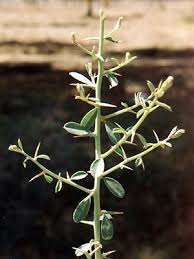
Stem: Erect, much-branched, woody, covered with sharp spines.
Leaves: Small, obovate, and sessile with a gray-green hue.
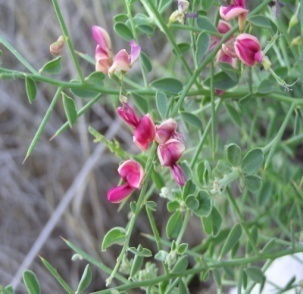
Flowers: Pinkish to purplish, pea-shaped, borne singly or in small clusters in the axils of spines.
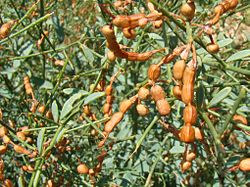
Fruit: Small pods containing a few seeds.
Roots: Deep-rooted system, sometimes exuding a sweetish manna-like substance.
Chemical Composition
Contains alkaloids (trigonelline), flavonoids, tannins, sucrose, mannitol, glucose, and a sweet exudate known as manna (Alhagi manna). Also contains resins and essential oils.
Useful in urinary disorders (Mutrakricchra, Mutraghata)
Blood purification and skin diseases
Fever, cough, and cold conditions
Wound healing and inflammation
Digestive aid and liver tonic
Exudate (manna) used as demulcent and mild laxative
Useful Part
Whole plant, especially roots and exudate (manna).
Doses
Powder (Churna): 3–6 g
Decoction (Kwatha): 20–50 ml
Fresh exudate (Manna): 1–2 g